
Shear walls are part of a building’s lateral-force-resisting system.
They help transfer wind and earthquake forces through the structure and into the foundation.
That means the details matter.
When a project requires special inspection of shear-wall construction, the inspector is not simply checking whether plywood or structural panels were installed.
The inspector is comparing the work in the field with the approved structural plans.
Does Every Shear Wall Require Special Inspection?
No.
Special-inspection requirements depend on the building, structural system, approved plans, permit, and applicable code provisions.
The California Building Code includes special-inspection requirements for certain wood shear-wall and seismic-force-resisting systems, including nailing, bolting, anchoring, fastening, and hold-downs, while also providing exceptions for some systems.
The easiest rule for the contractor is:
If the approved plans or permit require a deputy or special inspection, schedule it before the work is concealed.
What Can the Inspector Be Checking?
Depending on the project, a shear-wall inspection may involve checking:
- Wall location
- Wall length
- Sheathing type
- Sheathing thickness
- Nail size
- Nail spacing
- Edge nailing
- Field nailing
- Framing at panel edges
- Bolts
- Anchors
- Hold-downs
- Connections
- Compliance with the shear-wall schedule
The approved structural plans control the inspection.
That means the inspector needs access to the applicable wall schedule and structural details.
Nail Size and Spacing Matter
A shear wall can look finished and still be wrong.
One of the most important details is often the fastening schedule.
The California code provisions addressing structural wood special inspection specifically identify nailing, bolting, anchoring, and other fastening as items that may require verification.
A few inches of difference in fastener spacing can matter.
That is why the inspector is looking at more than whether the sheathing is attached.
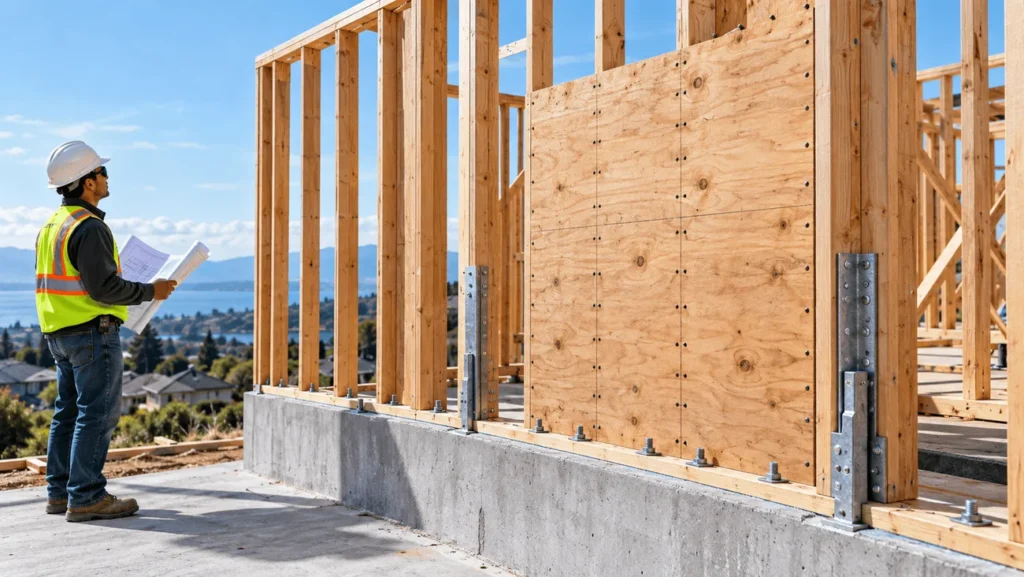
Joe’s Shear-Wall Inspection in Ventura
One of Joe Lucero’s recent Ventura County inspections involved shear walls in a two-story addition.
His report identified specific first- and second-floor wall locations and lengths, compared the work with the approved shear-wall schedule, and verified the use of 10d nails.
Joe reported that the observed walls met the minimum requirements shown on the approved schedule.
That report is a good example of what a shear-wall inspection actually looks like in the field.
It is specific.
The inspector is tying the installed work back to the approved structural design.
Have the Shear-Wall Schedule Available
Before the inspector arrives, make sure the approved structural plans are available.
The inspector may need to compare the installed work with information such as:
- Wall identification
- Wall length
- Sheathing requirements
- Nail size
- Edge spacing
- Field spacing
- Blocking
- Anchors
- Hold-downs
- Connection details
If the crew does not have the approved plan available, the inspector may not have enough information to verify the work.
Do Not Cover the Wall Too Soon
One of the most avoidable problems is covering structural work before the required inspection.
If the inspector needs to verify sheathing fastening, blocking, anchors, or hold-downs, those items need to remain visible.
Drywall, exterior finishes, or other covering materials can make later verification much harder.
If the permit requires inspection at a particular stage, stop before concealing the work.
Send Photos Before Inspection Day
If you are unsure whether the wall is ready, send Joe photos with the inspection request.
Photos can include the entire wall, corners, hold-downs, anchors, fastener patterns, the shear-wall schedule, and any detail you are concerned about.
That gives Joe a chance to spot something obvious before arriving.
If the nail spacing is wrong or an important structural detail appears to be missing, it is better to know while the crew still has access to the work.
Shear Wall Inspections in Ventura County
JL Special Inspections provides shear-wall and other deputy special inspection services throughout Ventura County and the southern Santa Barbara service area.
Joe serves projects in Ojai, Ventura, Oxnard, Santa Paula, Simi Valley, Thousand Oaks, Fillmore, Santa Barbara, and nearby unincorporated areas.
Need a Shear Wall Inspection?
Request an inspection and upload photos of the wall before Joe arrives.
Joe can review the project information in advance, compare the work with the approved structural requirements during the inspection, and get the PDF report moving quickly after the job is complete.