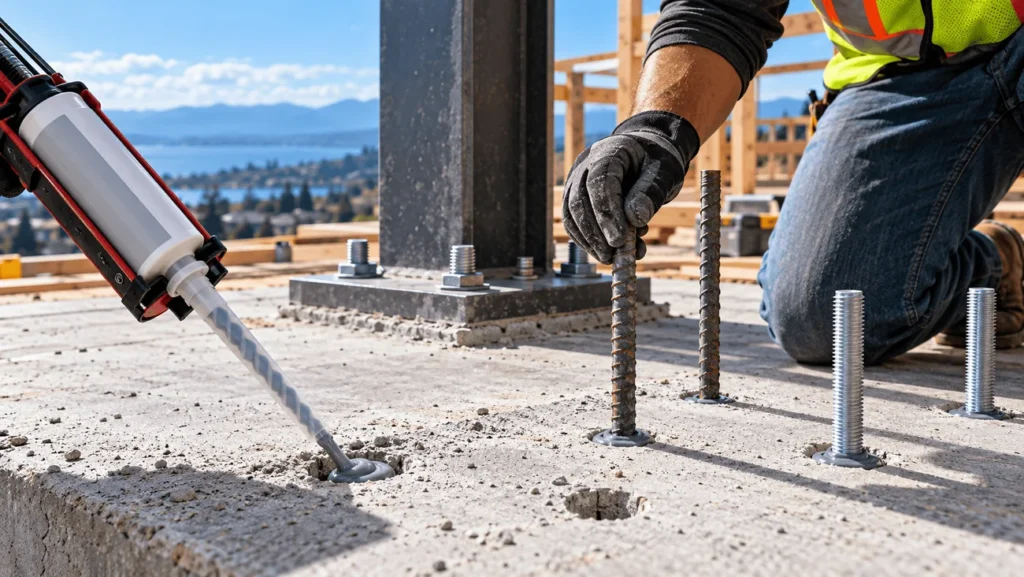
When approved plans call for post-installed rebar, dowels, or other adhesive anchors, the inspection is not just about seeing epoxy come out of a tube. The inspector needs to verify that the installation being performed matches the approved plans and that the work is being done correctly.
For contractors and property owners in Ventura, Oxnard, Ojai, Santa Paula, Simi Valley, Thousand Oaks, Fillmore, and surrounding areas, a little preparation before the special inspector arrives can save time and help keep the project moving.
What Does an Epoxy Special Inspector Look For?
The exact requirements come from the approved plans, specifications, product evaluation information, and the building department having jurisdiction over the project.
Depending on the installation, the inspector may need to verify things such as:
- Correct reinforcing bar or anchor size
- Required hole diameter
- Required embedment depth
- Hole location and spacing
- Proper cleaning of drilled holes
- Correct adhesive product
- Product expiration date
- Installation procedure
- Compliance with the approved structural details
For example, one of Joe Lucero’s recent epoxy inspections involved post-installed reinforcing dowels for a house foundation. The inspection included verifying the required embedment and confirming that the drilled holes were brushed, blown out, and clean before the epoxy was placed.
That is why preparation matters.
Clean Holes Matter
One of the easiest ways for an epoxy inspection to go sideways is poor hole preparation.
A drilled hole may look perfectly acceptable from the outside while still containing concrete dust and debris inside. Adhesive anchor systems depend on proper installation, including the preparation required by the approved system.
The California Building Code recognizes post-installed adhesive anchors as a specific category of anchorage to concrete and imposes special-inspection requirements in various circumstances. The exact inspection requirements depend on the application and approved construction documents.
The practical lesson is simple:
Do not assume a drilled hole is ready just because the drilling is finished.
Have the Approved Plans Available
Joe needs to know what the engineer actually specified.
Before inspection, have the applicable approved structural plans available, including the page and detail showing the installation whenever possible.
That allows the inspector to compare the work in the field against the required:
- Bar or anchor size
- Embedment
- Spacing
- Location
- Adhesive system
- Structural detail
Guessing wastes everyone’s time.
Send Photos Before Inspection Day
This is one of the easiest ways to catch an obvious problem before it becomes an inspection-day problem.
If you have questions about whether the work appears ready, send Joe photos when requesting the inspection.
Useful photos may include:
- The overall work area
- Close-ups of drilled holes
- Rebar or anchors to be installed
- Epoxy product and label
- Structural plan detail
- Any condition you are unsure about
Photos cannot replace the required on-site inspection, but they can help Joe identify something that may need attention before he arrives.
That can mean the difference between fixing a problem while the crew is already working and discovering it after everyone is waiting for approval.
Do Not Cover the Work Too Early
If the work needs to be observed before or during installation, make sure it remains accessible for inspection.
Once structural work is concealed, proving what happened underneath can become considerably more difficult.
When in doubt, ask before covering it.
Get the Inspection Scheduled Early
Construction schedules move quickly. Epoxy installations are often one small part of a much larger sequence of work, and delays at that point can hold up the next trade or the next phase of the project.
JL Special Inspections provides on-site special inspections throughout Ventura County and the surrounding service area, including Ventura, Oxnard, Ojai, Santa Paula, Simi Valley, Thousand Oaks, and Fillmore.
Deputy Special Inspector Joe Lucero has spent a lifetime in the masonry trade and understands that an inspection is not an academic exercise. The goal is to verify the work, complete the report, and help keep the project moving.
Need an Epoxy Special Inspection?
Request an inspection and upload photos of the work in advance.
Joe can review the information before inspection day and help identify potential problems before they cost you time on the job.