When a project requires special inspection of structural concrete, inspection day is about more than watching the concrete truck arrive.
The inspector may need to verify the concrete being placed, observe the work, perform required field testing, prepare test specimens, and document what happened during the pour.
For contractors working in Ventura County, having the job ready before the truck arrives can make the process considerably smoother.
When Is Concrete Special Inspection Required?
Ventura County Building and Safety identifies several types of work requiring special inspection, including concrete over 2,500 psi, concrete stem walls, shotcrete, post-tensioning systems, and structural masonry. The specific requirements for any individual project are controlled by the approved plans, permit requirements, and the agency having jurisdiction.
If your plans or permit call for a deputy or special inspector, schedule that inspection before the pour.
Do not wait until the concrete truck is already on the way.
What Happens During Concrete Sampling?
The exact testing depends on the project, but concrete special inspection can include several different tasks.
On one recent Ventura County structural-pad inspection, Joe documented:
- 3,000 PSI concrete
- A 4-inch slump
- Concrete temperature
- Mix-design information
- Verification of batch tickets
- Observation of concrete placement and consolidation
- One set of four 4-by-8-inch cylinders for laboratory testing
Those details matter because the inspection report creates a record of the concrete placed and the conditions observed during the work.
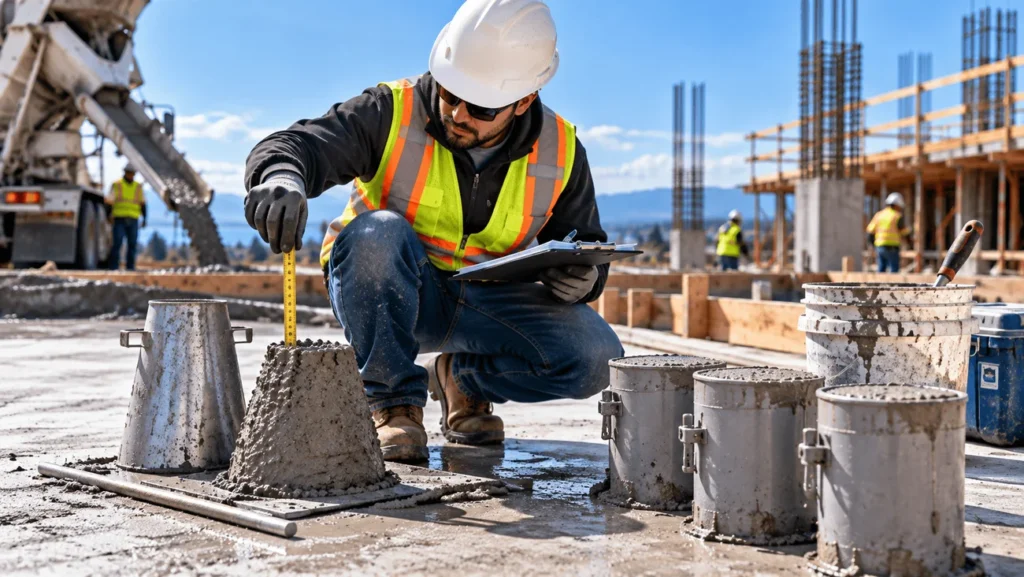
Slump Testing
A slump test provides information about the consistency of fresh concrete.
It is not simply a matter of deciding whether the concrete “looks wet enough.” The inspector records the measured slump as part of the testing and inspection process when required.
If the concrete arriving on site does not correspond with the project requirements, that can become an issue before the placement is completed.
Concrete Temperature
Concrete temperature may also be measured and documented.
Temperature can affect the behavior and curing of concrete, so where testing is required it becomes part of the field record along with other information about the mix and placement.
Concrete Cylinders
Concrete cylinders are made so that the concrete can later be tested for compressive strength.
The inspector prepares the required specimens during the pour, identifies them, and arranges for the testing process required for the project.
The cylinders are not the inspection itself. They are one part of documenting and verifying the concrete work.
The Inspector Is Also Watching the Placement
Concrete inspection is not limited to collecting samples.
The inspector may also be verifying that the work in the field corresponds with the approved plans and observing important aspects of placement.
In Joe’s structural-pad inspection, the report documented the placement location, mix design, consolidation by vibration, batch-ticket verification, and preparation of the test cylinders.
That is why the inspector needs to be coordinated with the pour—not called after the work is already finished.
What Should Be Ready Before the Pour?
Before inspection day, make sure the inspector has enough information to identify the project and understand what is being placed.
Useful information includes:
- Job-site address
- Permit number
- Approved plans
- Concrete strength specified
- Pour location
- Contractor information
- Expected pour time
- Any special instructions shown on the plans
If the schedule changes, tell the inspector as soon as possible.
Concrete trucks do not always operate on the schedule everyone hoped for, but communication prevents a schedule change from becoming an inspection problem.
Send Information Before Inspection Day
When requesting an inspection with JL Special Inspections, you can provide the project information, preferred inspection time, permit information, and photos in advance.
That gives Joe a chance to understand the job before arriving on site.
If there is something unusual about the pour, include it in the request.
Need Concrete Sampling or Special Inspection?
JL Special Inspections provides concrete special inspection and sampling services throughout Ventura County and the surrounding service area, including Ventura, Oxnard, Ojai, Santa Paula, Simi Valley, Thousand Oaks, and Fillmore.
Request your inspection before pour day and provide the project details in advance.
Getting the inspector scheduled early is one more way to keep the concrete—and the project—moving.